
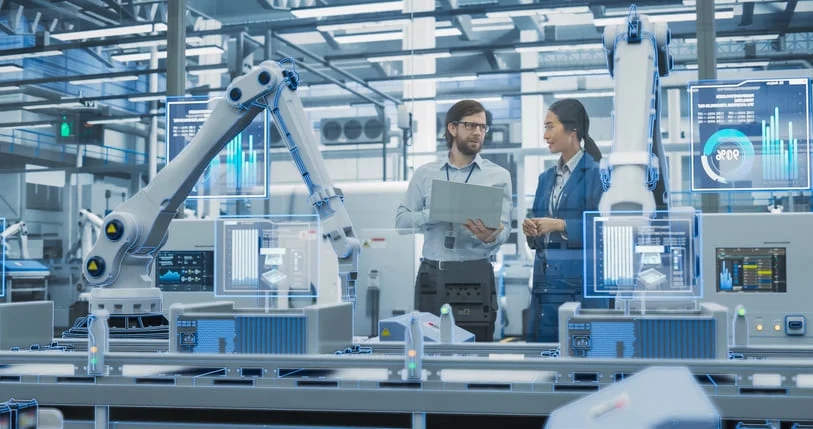
The modern corporate landscape is undergoing a silent structural overhaul. Across global sectors, the reliance on manual, repetitive, and time-consuming workflows is rapidly giving way to automated technological ecosystems. Business automation has progressed far beyond basic macro commands or automated email responses. Today, it represents a deep integration of algorithmic workflow orchestration, optical character recognition, robotic process automation, and cognitive machine learning.
This operational shift is fundamentally altering how organizations deploy their human capital. By offloading routine transactional and administrative burdens to specialized software engines, enterprises can drastically minimize human error, compress operational cycles, and lower baseline overhead. Far from merely cutting costs, automation serves as a primary driver of organizational agility, enabling businesses to scale their daily outputs without experiencing a linear increase in operational friction.
Transforming Supply Chain Logistics and Warehouse Management
The logistics and supply chain sectors operate within incredibly thin margins where minor delays compound into substantial financial losses. Automation has completely revolutionized how goods are tracked, sorted, stored, and routed from production facilities to final destination doorsteps.
In modern distribution facilities, automated inventory tracking software operates continuously without human oversight. When an item is purchased, the system automatically decrements the internal database, cross-references current sales velocity, and triggers automated purchase orders to manufacturing suppliers the moment stocks cross a specific threshold. This just-in-time inventory framework eliminates the need for expensive warehouse overstocking while simultaneously preventing product stockouts.
On the physical floor, warehouse management systems integrate directly with autonomous guided vehicles and robotic picking arms. These systems run on optimized routing algorithms that calculate the most efficient path through a facility to fulfill an order, maximizing hourly throughput. By handling the physical transport and tracking of freight automatically, companies can run distribution networks that operate continuously through the night with absolute precision.
Redefining the Customer Experience and Support Architecture
Customer expectations regarding brand interactions have fundamentally shifted toward immediate gratification. The traditional support model, which required customers to wait on phone lines or check email inboxes for hours, can no longer sustain consumer loyalty. Automation has allowed enterprises to deploy highly responsive support architectures that operate continuously.
At the frontline of this evolution are conversational artificial intelligence layers and intelligent routing engines. When a customer initiates contact, automated classification algorithms analyze the text or voice input to determine sentiment, intent, and complexity. Routine inquiries, such as checking order shipping statuses, executing account password resets, or processing basic product returns, are handled completely by automated self-service workflows.
-
Intelligent Escalation Pathways: When a consumer faces a nuanced issue that requires human empathy or complex problem-solving, the automation framework instantly routes the interaction to the exact department best equipped to handle it, accompanying the transfer with a complete summarized history of the customer journey.
-
Proactive Engagement Engines: Automation tools continuously monitor user interactions on digital platforms. If a user spends an unusual amount of time stuck on a checkout screen, the system can automatically trigger targeted assistance or offer dynamic troubleshooting documentation before the consumer decides to abandon the transaction.
-
Omnichannel Synchronization: Modern support tools automatically unify client communications across email, social media, web chat, and phone calls into a single chronological master profile, ensuring support personnel have instantaneous context without requiring the customer to repeat information.
Optimizing Human Resources and Talent Acquisition Workflows
Human resources departments have historically been heavily burdened by administrative paperwork, compliance tracking, and repetitive communication cycles. Automation tools have successfully intercepted these workflows, liberating HR professionals to focus on strategic culture building and employee retention.
The talent acquisition pipeline benefits immensely from automated screening mechanics. When an enterprise opens a highly competitive job vacancy, applicant tracking systems automatically parse thousands of incoming resumes. Using advanced keyword filtering and contextual semantic analysis, the software identifies candidates whose professional history, core skill sets, and educational backgrounds perfectly align with the core job description parameters.
Once top-tier candidates are identified, automated scheduling modules interface directly with internal calendars to coordinate multi-stage interview panels, removing hours of logistical back-and-forth communication. Furthermore, the employee onboarding journey is managed by automated compliance engines. New hires receive automated portals that guide them through tax documentation, benefits enrollment, and mandatory regulatory training modules, ensuring full compliance with zero manual HR oversight.
Elevating Financial Operations and Reporting Accuracy
Corporate financial accounting demands absolute mathematical accuracy and strict adherence to shifting regulatory standards. The manual input of invoice data, expense tracking, and monthly ledger reconciliation has always been a primary source of human error and internal fraud vulnerabilities.
Modern financial departments rely heavily on automated accounts payable and receivable networks. When a vendor transmits an invoice, intelligent document processing tools use optical character recognition to read the text, extract line-item costs, validate the invoice against existing corporate purchase orders, and clear the invoice for payment if the numbers match perfectly.
During end-of-month accounting periods, automated reconciliation software interfaces directly with corporate bank accounts and internal resource planning tools. The software automatically flags duplicate charges, highlights unexplained ledger variances, and generates comprehensive cash flow reports for corporate executives. This level of automation ensures that corporate leadership can view real-time fiscal metrics rather than waiting weeks for manual accounting summaries to be hand-compiled.
Streamlining Marketing and Sales Pipeline Management
The modern sales funnel generates vast quantities of consumer interaction data across a multitude of digital touchpoints. For a human sales team to manually qualify, track, and nurture every single digital lead is an operational impossibility. Marketing and sales automation platforms bridge this structural gap.
When a prospective buyer interacts with digital content or downloads a corporate whitepaper, marketing automation tools instantly create a tracking profile. The software tracks ongoing user behaviors, such as website visits, webinar attendance, and email open rates, calculating a dynamic lead score based on engagement depth.
When a prospective lead crosses a specific qualification score, the automation system immediately hands the account over to the active sales pipeline, assigns it to a regional representative, and generates automated prompts suggesting the most impactful product solutions based on the prospect’s historical browsing footprints. This programmatic approach ensures that high-value opportunities are never lost due to manual tracking oversight or slow response times.
Frequently Asked Questions
What is the distinction between robotic process automation and cognitive artificial intelligence?
Robotic process automation relies entirely on deterministic, rule-based software scripts designed to execute repetitive, highly structured tasks that do not change, such as copying data from a spreadsheet into a legacy database. Cognitive artificial intelligence incorporates machine learning and natural language processing, allowing the software to analyze unstructured data, recognize ambiguous patterns, adapt to unexpected operational variations, and make independent probabilistic decisions based on historical datasets.
How do automation tools mitigate the risk of reproducing human bias during recruitment cycles?
Automation tools mitigate bias by focusing strictly on objective, standardized parameters such as years of specific software experience, professional certifications, and hard skills listed within resumes. By stripping out identifying demographic data like names, gender markers, ages, and addresses during the initial evaluation phase, the software ensures candidates are evaluated solely on merit, though the underlying algorithms must still be regularly audited to ensure the initial training data itself did not contain systemic biases.
Does the integration of extensive automation compromise an organization’s cybersecurity framework?
Integrating automation can introduce new security vulnerabilities if access permissions are configured incorrectly, as automated service accounts often require broad integration access across multiple software platforms. However, if implemented correctly following strict zero-trust security architectures, automation actively enhances cybersecurity by continuously monitoring network logs, detecting irregular user behavior patterns, and immediately executing automated isolation protocols to contain threats faster than human security teams can respond.
What parameters should a business evaluate when deciding whether to automate a specific operational workflow?
An organization should evaluate a workflow based on volume, standardization, predictability, and error vulnerability. The ideal candidates for automation are high-volume tasks that follow a clear, unchanging sequence of steps, require minimal subjective human intuition, consume significant employee hours, and pose a high financial risk if manual data entry errors occur. If a process changes completely every week or requires deep creative nuance, it should remain manual.
How can a company maintain an authentic human connection with customers when utilizing automated support channels?
To maintain an authentic connection, businesses must treat automation as an assistant rather than a total replacement for human interaction. Automation should be deployed to handle low-level administrative friction, such as gathering account numbers, summarizing the problem, and resolving basic inquiries. For sensitive, emotionally charged, or highly intricate customer situations, the automation must provide an immediate, seamless handoff to a live human representative without forcing the customer to repeat their issue.
How does operational automation impact the long-term career trajectory of baseline administrative workers?
While automation reduces the necessity for manual data entry and routine administrative roles, it rarely eliminates the need for human workers entirely. Instead, it shifts the employment landscape toward higher-value skills. Workers transition from being data processors to system overseers, data analysts, and strategic decision-makers. The long-term career trajectory shifts toward technological literacy, process optimization, and complex problem-solving, requiring ongoing corporate upskilling initiatives to help staff transition into these advanced roles.
